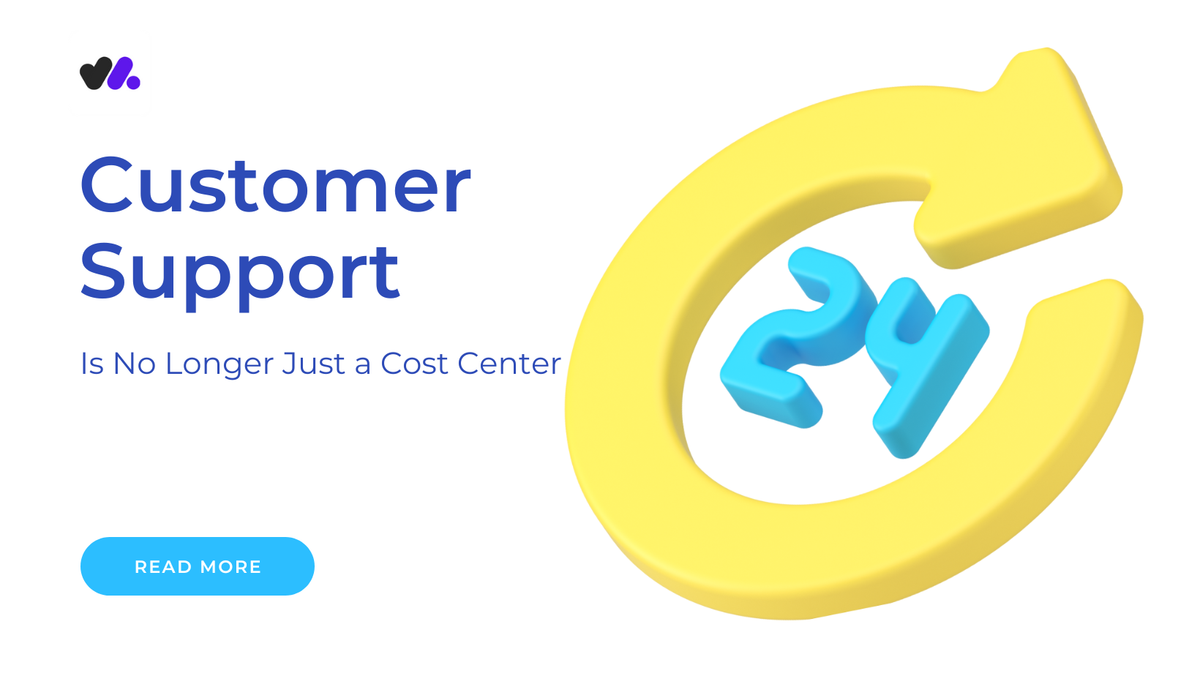
Customer Support Is No Longer Just a Cost Center
For years, customer support was treated as a necessary expense.
Something businesses maintained, not something they invested in.
Support teams were expected to:
- Handle issues after things went wrong
- Close tickets as fast as possible
- Stay out of product and growth conversations
That approach no longer works.
Today, customer support sits at the center of customer experience, retention, and growth.
And companies that still treat it as a cost center are quietly falling behind.
Why Support Was Seen as a Cost
Traditionally, support was reactive.
A customer had a problem.
A ticket was created.
An agent responded.
Success was measured by speed and volume, not by outcomes.
Because of this mindset, many teams ended up with:
- Disconnected tools
- Slow response times
- Limited visibility into customer issues
- No clear path from support to product improvement
Support existed to fix problems not to improve the business.
What Changed: Customers Expect Better
Modern customers expect more than just answers.
They expect:
- Instant conversations, not delayed replies
- Clear self-service options when they don’t want to talk
- Human support when automation isn’t enough
- Consistent experiences across website, chat, and messaging apps
When these expectations aren’t met, customers don’t always complain.
They leave.
This is why support today has a direct impact on how users perceive your product and your brand.
How Customer Support Now Drives Growth
Support is no longer a background function. It actively influences growth.
Retention
Fast, helpful support keeps customers engaged and confident in your product. Poor support accelerates churn even when the product itself is solid.
Conversion
Real-time conversations during onboarding or buying moments help users make decisions faster and with more trust.
Trust & Brand Experience
Support is often the most personal interaction a customer has with your business. It shapes whether your brand feels reliable or frustrating.
In many cases, support is the product experience.
Why Tools Matter More Than Ever
As support becomes more strategic, the tools behind it become critical.
Growing teams need more than just a chat widget or a basic ticket system.
They need a complete support setup that includes:
- Live chat for real-time conversations
- Chatbots and automation to handle repetitive questions
- A help center customers actually want to use
- Seamless handoff from bot to human
- Analytics and insights to understand customer needs
This is where modern support platforms make the difference.
How Widgion Fits Into Modern Support Teams
Widgion is built for teams that no longer see support as an afterthought.
With Widgion, businesses can:
- Combine chatbots, live chat, and self-service in one place
- Automate common questions while keeping human support accessible
- Create a Help Hub that reduces tickets instead of increasing them
- Manage conversations across channels without losing context
- Scale support without overwhelming their team
Instead of stitching together multiple tools, teams use Widgion to design support intentionally around real customer behavior.
Support as Infrastructure, Not Overhead
High-performing companies don’t ask:
“How do we spend less on support?”
They ask:
“How do we support customers better as we grow?”
They invest in systems that:
- Reduce friction for users
- Give teams clarity and control
- Turn support into a long-term advantage
When support is built this way, it stops feeling expensive and starts driving measurable value.
Final Thought
Customer support is no longer just about fixing problems.
It’s about building trust, improving retention, and enabling growth.
Companies that treat support as infrastructure supported by the right tools, create better customer experiences by default.
Widgion exists to help teams do exactly that.